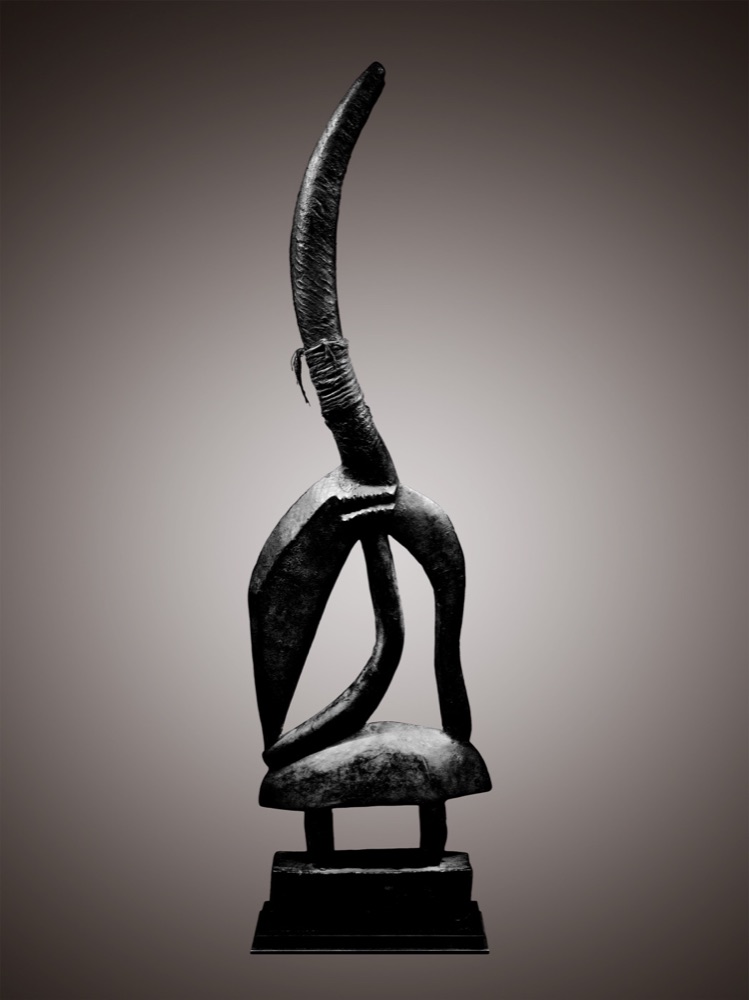
Tchiwara: antelope form and agricultural knowledge
Tchiwara headdresses from the Bamana of Mali are among the most recognizable forms of West African sculpture. Their antelope-like structure is linked to agricultural knowledge, discipline and collective labor. The form does not reproduce an animal in a literal way; it transforms animal energy into a visual emblem of cultivation and social order.
The elongated horns, open structure and dynamic silhouette create a sculpture designed for movement. Worn in performance, the headdress interacts with the body of the dancer and with the rhythm of communal ceremonies. Its meaning is therefore both visual and performative: the carved form becomes a moving lesson about work, fertility and responsibility.
In the broader field of African art, Tchiwara headdresses show how abstraction can arise from ritual function. Their formal elegance is inseparable from a social philosophy of agriculture and transmission.
Bibliography and comparisons
- Jean-Paul Colleyn, writings on Bamana art and ritual systems.
- Kate Ezra, Art of the Dogon and related studies on Mali, for regional comparison.
- Metropolitan Museum of Art, Tchiwara, for museum comparisons.
- British Museum, Tchiwara, for related examples.