Baule portrait masks: ideal likeness and social performance
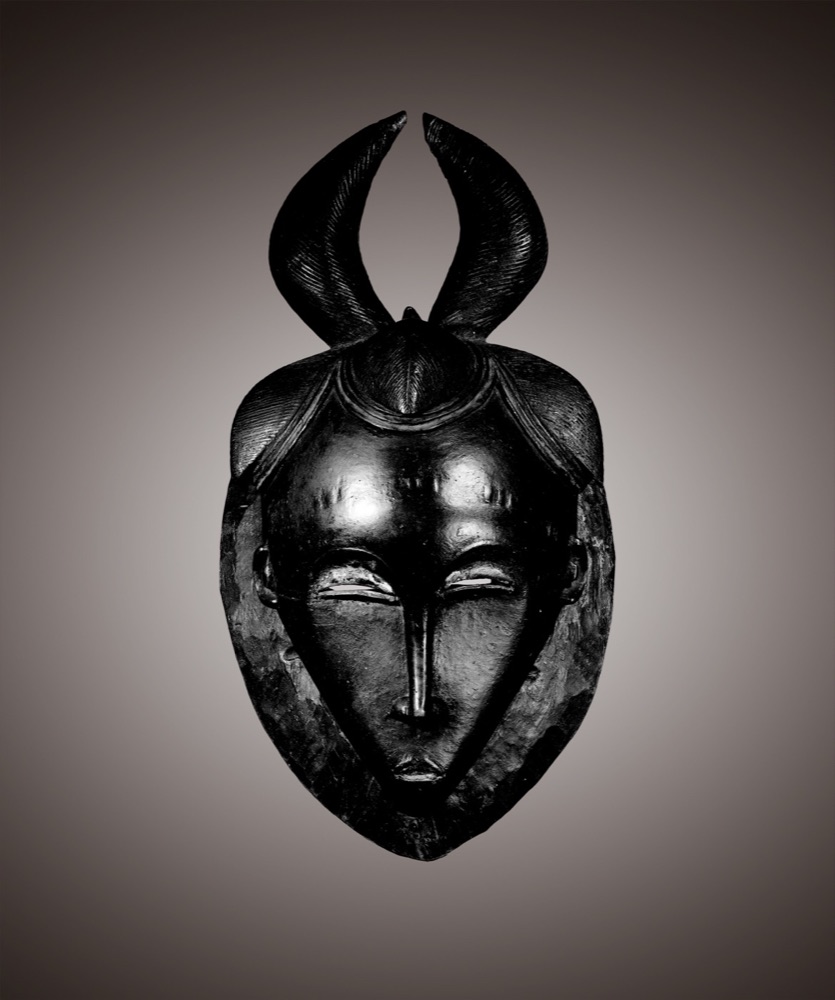
Baule portrait masks, often discussed in relation to ndoma and mblo performances, occupy a distinctive place in West African art. They do not function as naturalistic portraits in the Western sense. Instead, they translate social recognition into an idealized image: beauty, composure, refinement and moral presence are condensed into the face.
The mask may evoke a known person while transforming that person into an exemplary figure. Hairstyle, scarification, smooth surfaces and controlled symmetry contribute to this idealization. The performance context is essential: the mask is animated through dance, music and public recognition, turning the sculpted face into a social event.
For the study of African sculpture, Baule portrait masks show how likeness can be constructed without imitation. The image is social, aesthetic and performative at once. Its power lies in the balance between individual reference and formal ideal.
Bibliography and comparisons
- Susan M. Vogel, Baule: African Art, Western Eyes, for Baule masks and aesthetics.
- Alain-Michel Boyer, Baule, for cultural and sculptural context.
- Metropolitan Museum of Art, Baule portrait mask, for comparisons.
- Brooklyn Museum, Baule mask, for related works.