Period: Transitional Period Takuri, 11th century
Materials: Gilt copper, glass
Dimensions: 41 cm
Provenance
Collection Ian Alsop, USA
Collection Mr. and Mrs. I. Meijer, Netherlands
Private Collection, Milan
Exhibitions
Parcours des Mondes, Paris, 2024
Publications
J. Van Alphen, Cast for Eternity, Antwerp 2005, pp. 114–115
Description
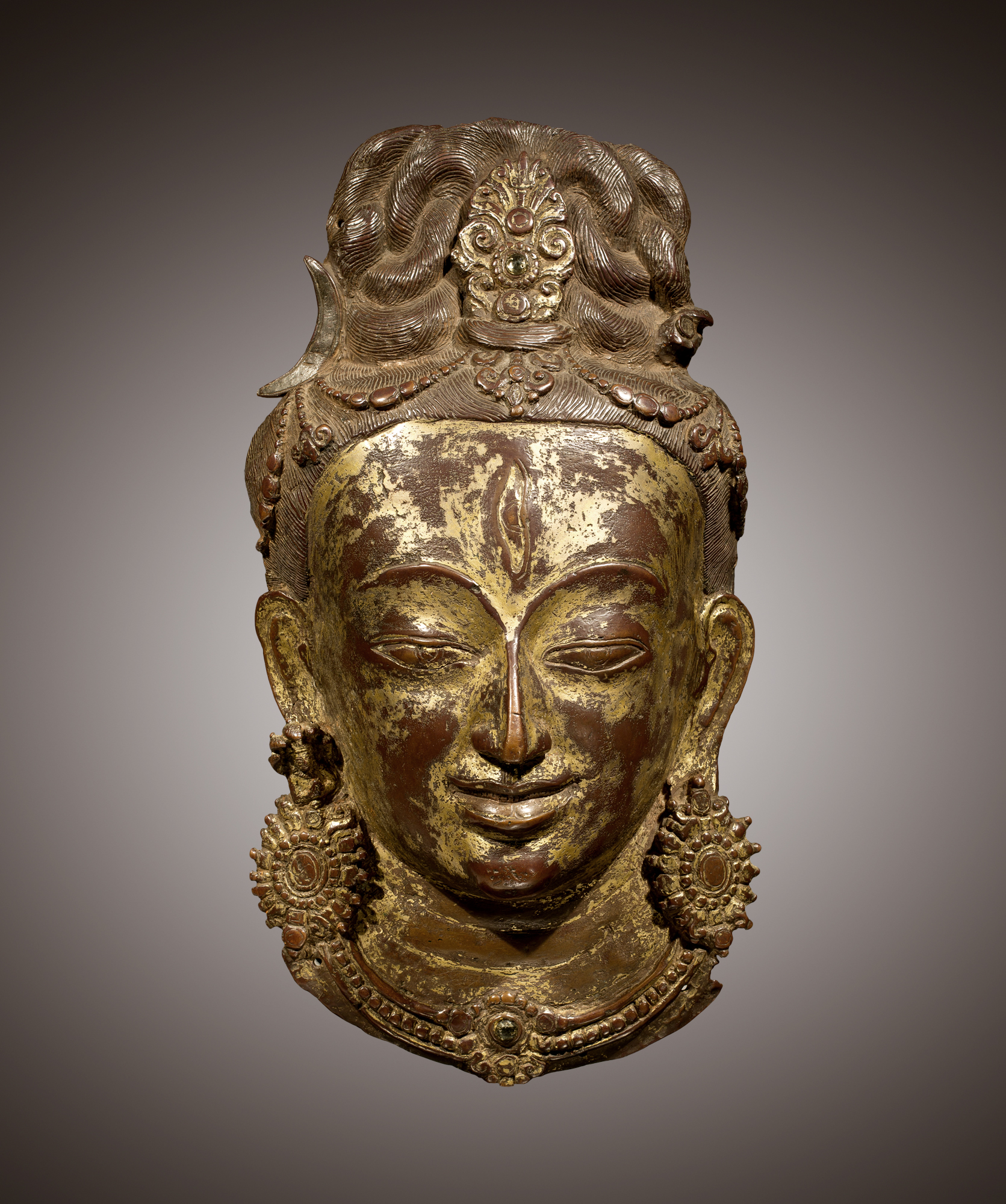
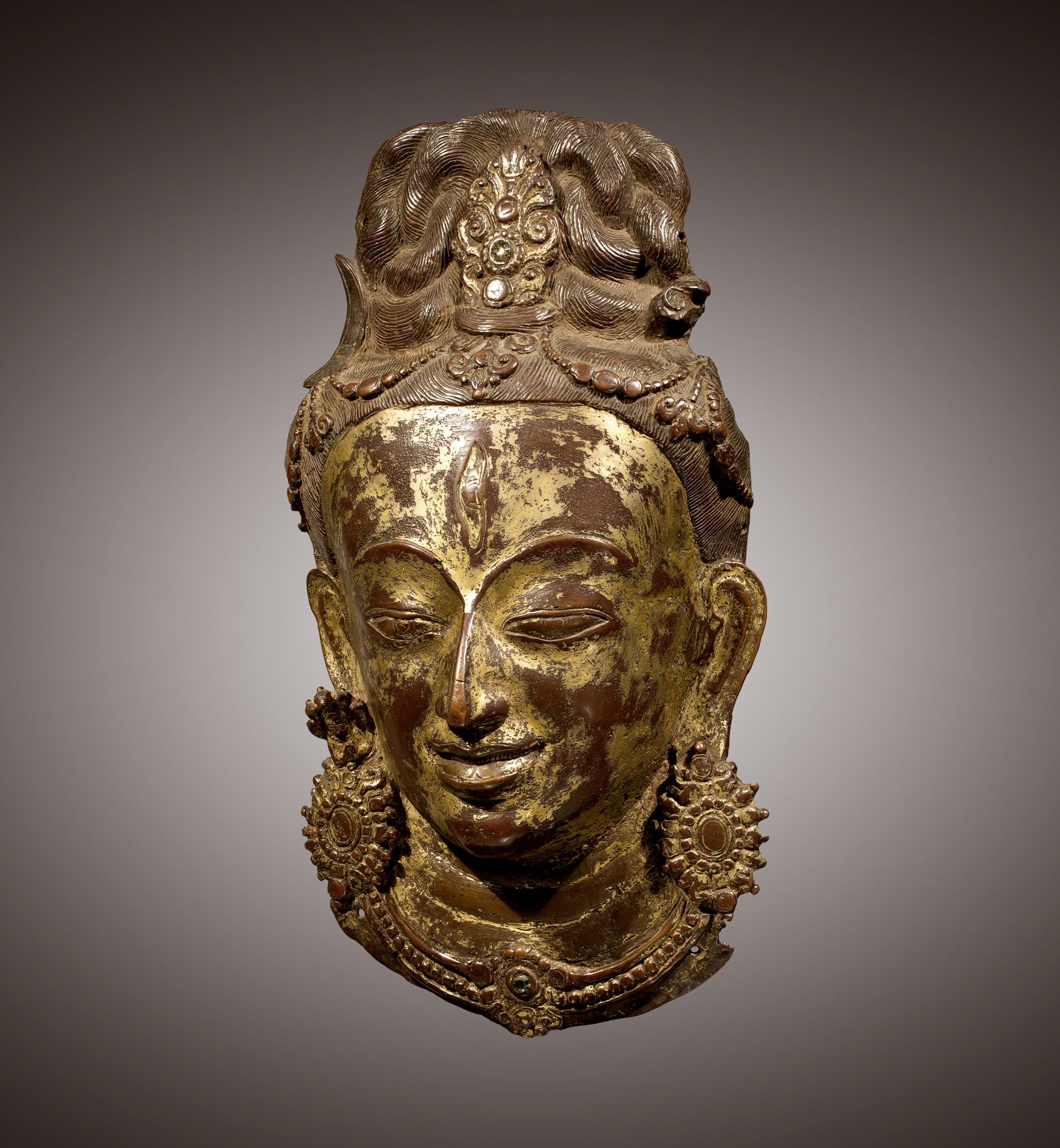
In Himalayan and Nepalese art, bodiless divine heads cast in metal or repoussé form represent a well-established typology. Although often referred to as “masks,” these objects were never intended to be worn, but functioned as independent sacred images. Comparable examples include Shiva head plaques from Himachal Pradesh and Bhairava images in the Kathmandu Valley.
During religious festivals, these images were dressed and carried in procession, temporarily embodying the full presence of the deity. For the rest of the year, they were displayed in temples and shrines as objects of worship. The cult of Shiva, both creator and destroyer, has deep roots in the Kathmandu Valley. This devotion is centered on the Pashupati Temple and continues through daily offerings made by devotees.
This image, attributed to the pre-Malla period, depicts Shiva in his benevolent aspect. He appears as a princely ascetic, serene and hieratic. The refined modelling and the use of gilt copper reflect the high technical level of 11th-century Nepalese metalwork.
In this form, Shiva acts as protector of rural communities, closely linked to agricultural cycles. The image embodies a controlled and benevolent spiritual presence. Medieval Nepalese gilt copper sculptures are highly valued for their artistic and spiritual qualities. This example represents an important work from the pre-Malla period within the broader context of Himalayan art.