Zoomorphic Figures in Dogon Art: the Dog
In Dogon art from Mali, the dog appears as an animal closely connected with human life and narratives of origins. A tradition concerning migration to the Bandiagara escarpment recounts that a dog’s wet paws revealed the presence of water, providing vital guidance for the group’s survival. The story associates the animal’s ability to find its way with knowledge of the environment and the choice of a place to settle. The dog thus becomes a guide within communal memory.
This relationship helps explain the evocative power of zoomorphic images. A domestic animal lives close to people while retaining sensory abilities and behaviours that allow it to move between the settlement and its surroundings. Protection, orientation and recognition of places connect its image with the relationship between community and landscape. The narrative brings together a practical necessity, water, and the remembered foundation of a settlement.
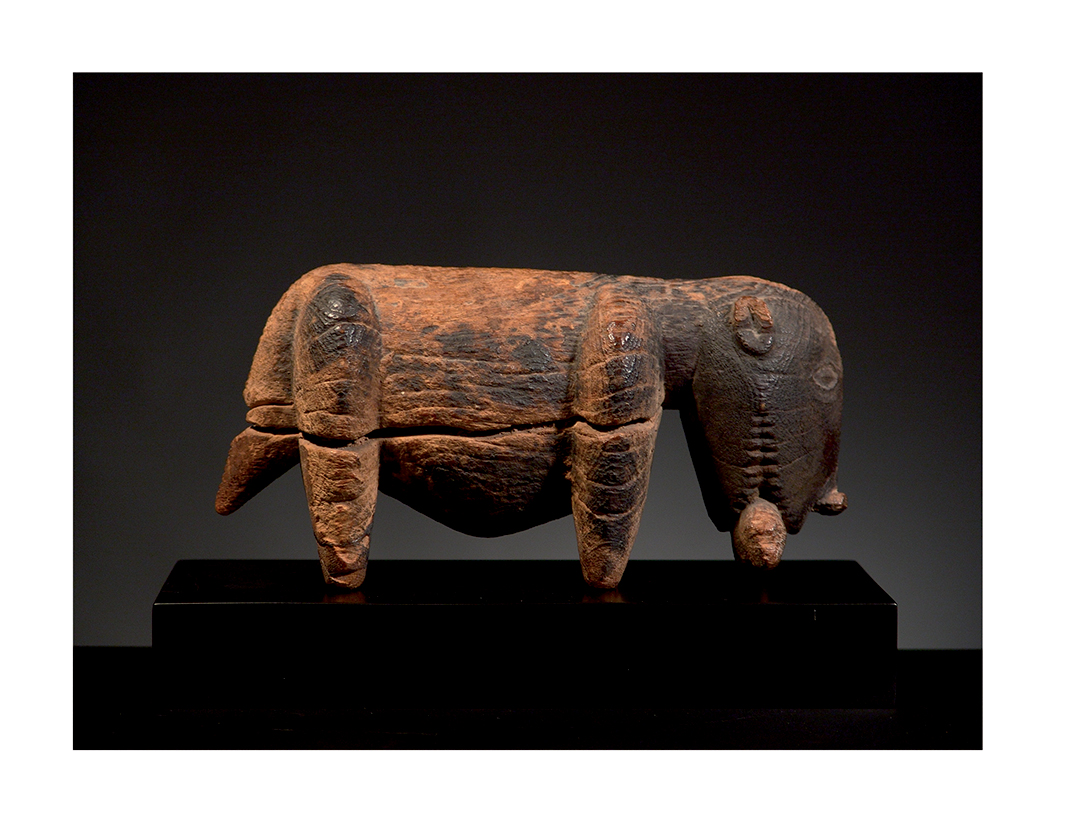
In sculpture, recognition of the dog depends on the organisation of muzzle, ears, back and limbs. The sculptor selects and connects these features in a compact body, giving profile and the arrangement of legs greater importance than minute anatomical description. This formal economy retains the animal’s identity while giving the image a firmness appropriate to a lasting object.
The subject belongs within the wider history of sculpture in Mali, where Dogon traditions are distinguished from works predating the documented Dogon presence in the region. A pre-Dogon image, such as the example illustrating this article, offers a comparison within the long history of animal representation; it does not necessarily share the context of the Bandiagara narrative. Relationships between objects, stories and regional traditions become clearer when form, chronology and available documentation are studied together.
Bibliography and comparisons
- Jean Laude, African Art of the Dogon.
- Hélène Leloup, Dogon.
- Metropolitan Museum of Art, Dogon objects.