African tribal art: history of a term and critical use
The expression “African tribal art” has circulated widely in collecting, publishing and the art market. Its history is intertwined with colonial classifications that tended to represent different societies as homogeneous, separate groups largely unaffected by change. The category could encompass works widely separated by date, location, function and the political organisation of their communities. This usage influenced both descriptions of objects and their presentation in museums.
In Western reception, “tribal” was often associated with terms such as “primitive” and “ethnographic”. These expressions are not equivalent, but they helped separate African works from the categories applied to European art. Growing recognition of their artistic quality changed this distinction without automatically removing the assumptions behind it. Historical terminology is therefore best understood in relation to the circumstances of its use and the knowledge available at the time.
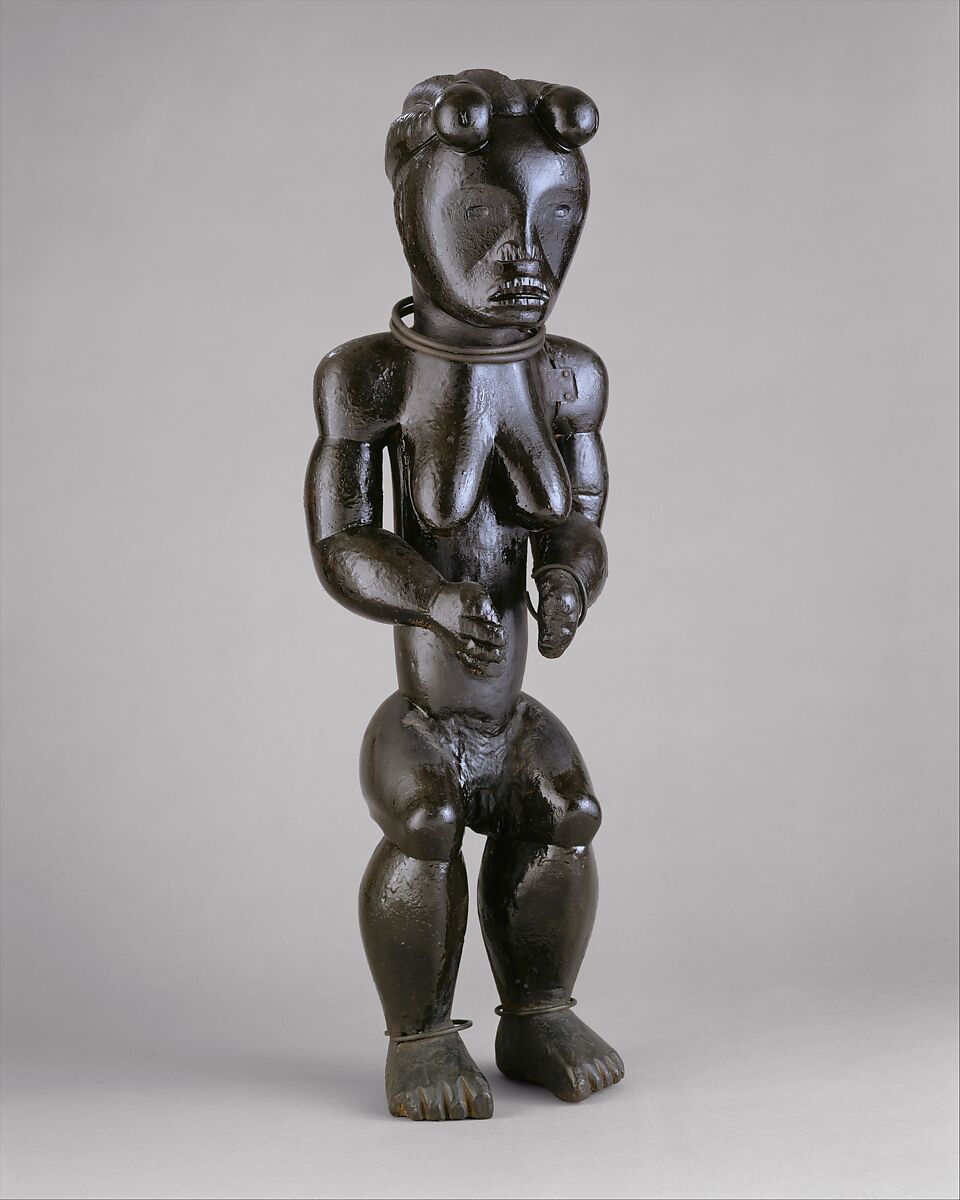
A more precise description identifies, where documented, geographical area, cultural tradition, period, object type and function. Terms such as Dan masks, Hemba ancestral figures, Kota guardian images and Bamana Tchiwara headdresses distinguish specific practices and visual languages. A community name does not, however, explain the entire history of a work. Regional centres, exchanges, commissions and individual sculptors’ decisions all contribute to artistic diversity.
When found in an early catalogue or collection record, “tribal art” remains evidence of the language of that period. Present-day use benefits from information explaining the particular works concerned. The Gallery’s presentation of African sculpture follows this approach through recognisable traditions and individual material histories. Moving from a broad category to detailed knowledge of an object makes its artistic achievement more clearly understood.
Bibliography and comparisons
- Sally Price, Primitive Art in Civilized Places.
- James Clifford, The Predicament of Culture.
- Metropolitan Museum of Art, African Influences in Modern Art