African Art and the European Avant-Garde
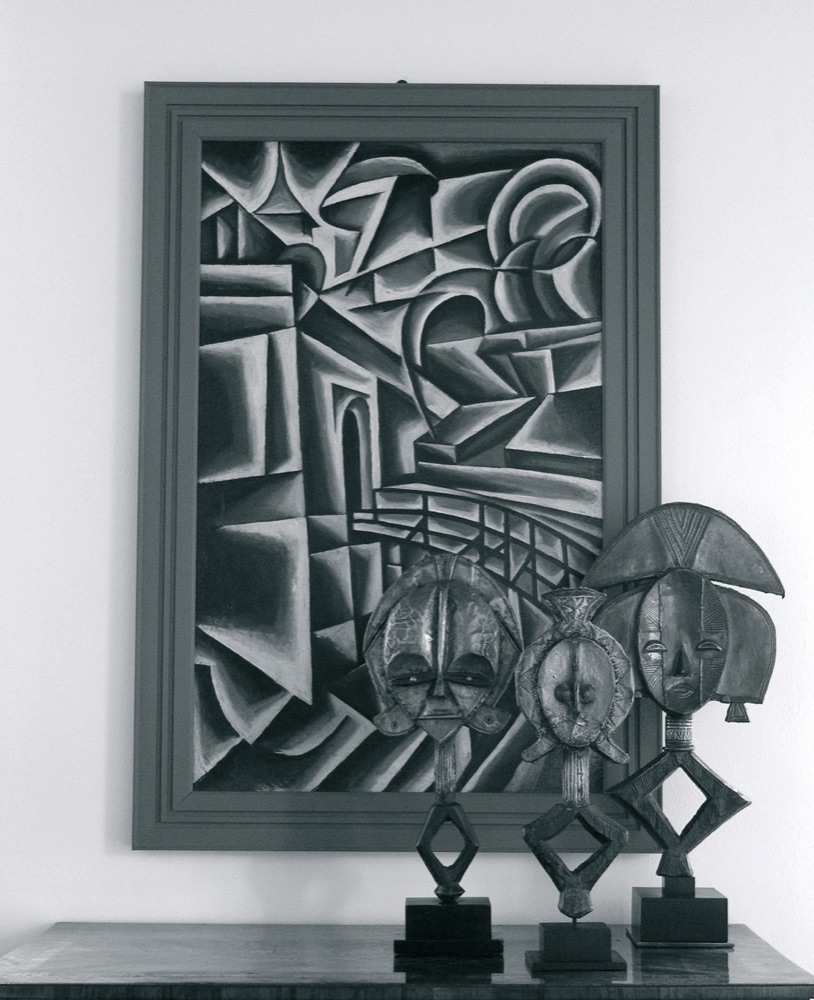
At the beginning of the twentieth century, African art became increasingly important to the European avant-garde. Works held in ethnographic collections also circulated through dealers, collectors and artists’ studios, where their sculptural qualities attracted close attention. Matisse, Derain, Picasso and other artists found in African masks and figures ways of constructing the body that widened the possibilities of Western painting and sculpture. These encounters formed part of the reassessment of perspective, proportion and representation that had begun with Post-Impressionism.
Matisse’s interest in African sculpture also found expression in collecting: the catalogue Matisse. Il mondo in una stanza documents a Senufo divination figure formerly owned by the artist. As Ellen McBreen observes, his attention favoured formal qualities, without a similarly detailed understanding of the works’ original contexts (2026, p. 20, cat. 1).
Artists were particularly interested in the organisation of form. Compact volumes, distinct planes, selective proportions and linear rhythms demonstrated how an image could remain coherent without reproducing natural appearances. Fang figures and Kota guardian images offered strikingly different solutions: the former construct the body through solid masses, while the latter organise the face through metal surfaces and an emphatic frontal structure. These differences remain essential when discussing the works in relation to modernism.
Primitivism is a historical term for part of this European reception, but it also carries the cultural hierarchies within which that reception developed. Aesthetic admiration could coexist with limited knowledge of African societies and with the mistaken notion that their cultures stood outside history. Recognition of artistic quality did not immediately overcome these prejudices. A critical account distinguishes European interpretations from the functions, meanings and histories of sculptures within the communities that produced them.
Within the Gallery’s programme, encounters between African sculpture and modern art invite attention to historical relationships and formal achievement. Masks, ancestral figures and prestige objects belong to independent traditions, with their own standards of beauty and artistic skill. Their dialogue with the avant-garde is an important chapter in their international reception; its significance becomes clearer through the study of makers, contexts of use and collecting histories.
Bibliography and comparisons
- Ellen McBreen, «Attraversare i confini, reali e immaginari», in Ellen McBreen, Chiara Gatti (eds.), Matisse. Il mondo in una stanza, 24 ORE Cultura, 2026, p. 20, cat. 1.
- William Rubin, Primitivism in 20th Century Art.
- Jean Laude, La peinture française et l’art nègre.
- Metropolitan Museum of Art, African Influences in Modern Art