Hemba Statues: Ancestors, Lineage and Monumentality in African Sculpture
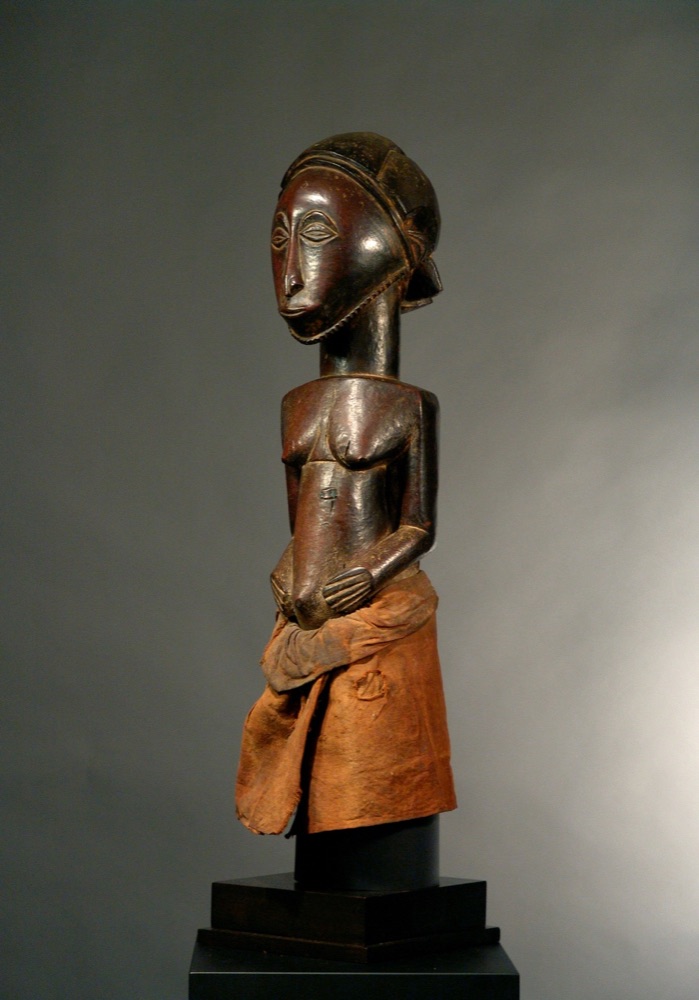
Hemba ancestral figures from the Democratic Republic of the Congo, known as singiti, commemorate distinguished chiefs and predecessors, linking lineage history with the continuity of authority. They are idealised images of individuals remembered by the community: selected features and balanced proportions transform personal memory into an enduring figure. The identification of a particular ancestor and the sculpture’s formal quality belong to the same commemorative purpose.
Successors preserved and transmitted these images, forming groups that testified to kinship and ties to the land. Their custody, often restricted to authorised individuals, distinguished them from images intended for public display. Through sculpture, the ancestor remained part of the group’s life, retaining both memory and prestige. Genealogical remembrance thus also possessed social and political significance.
Hemba monumentality arises from the construction of the body rather than its physical scale. Upright posture, a compact torso and a large head form a stable structure. Composed eyes and carefully carved coiffures give dignity to the face; arms and hands, often placed beside the abdomen, draw attention to an area associated with genealogical continuity. Clear volumes make the figure legible from different viewpoints without emphatic gestures.
Variations in coiffure, proportion and modelling reveal distinct stylistic centres and artistic personalities. A recurring pose allows considerable invention through relationships between parts and the definition of surfaces. Comparison with Fang guardian figures distinguishes Hemba commemoration from the custody of byeri relics. Both traditions maintain relationships with ancestors, through their own sculptural solutions and specific practices.
Bibliography and comparisons
- François Neyt, La grande statuaire Hemba du Zaïre.
- Alisa LaGamma (ed.), Eternal Ancestors: The Art of the Central African Reliquary, Metropolitan Museum of Art, 2007.
- Metropolitan Museum of Art, Singiti, Hemba