Period: Kushan dynasty, 3rd–4th century AD
Materials: Stucco with pigments
Dimensions: 41.5 cm
Provenance
Private Collection, Germany
Description
Gandharan art, developed between the 1st and 4th centuries AD, represents a key moment in the emergence of the anthropomorphic image of the Buddha. Located along the Silk Road, Gandhara was a crossroads of Indian, Central Asian and Hellenistic cultures, giving rise to a unique artistic synthesis. The depiction of the Buddha in human form gradually emerged between the 1st century BC and the 2nd century AD, replacing earlier symbolic representations. These included the empty throne, footprints and the Dharma wheel. The rise of Mahayana Buddhism played a decisive role in the creation of direct devotional images.
The sculpture is made of stucco with pigments, a material widely used in Gandhara from the 3rd century AD onward. Stucco allowed greater flexibility in modeling compared to stone, enabling refined detail and expressive surfaces.
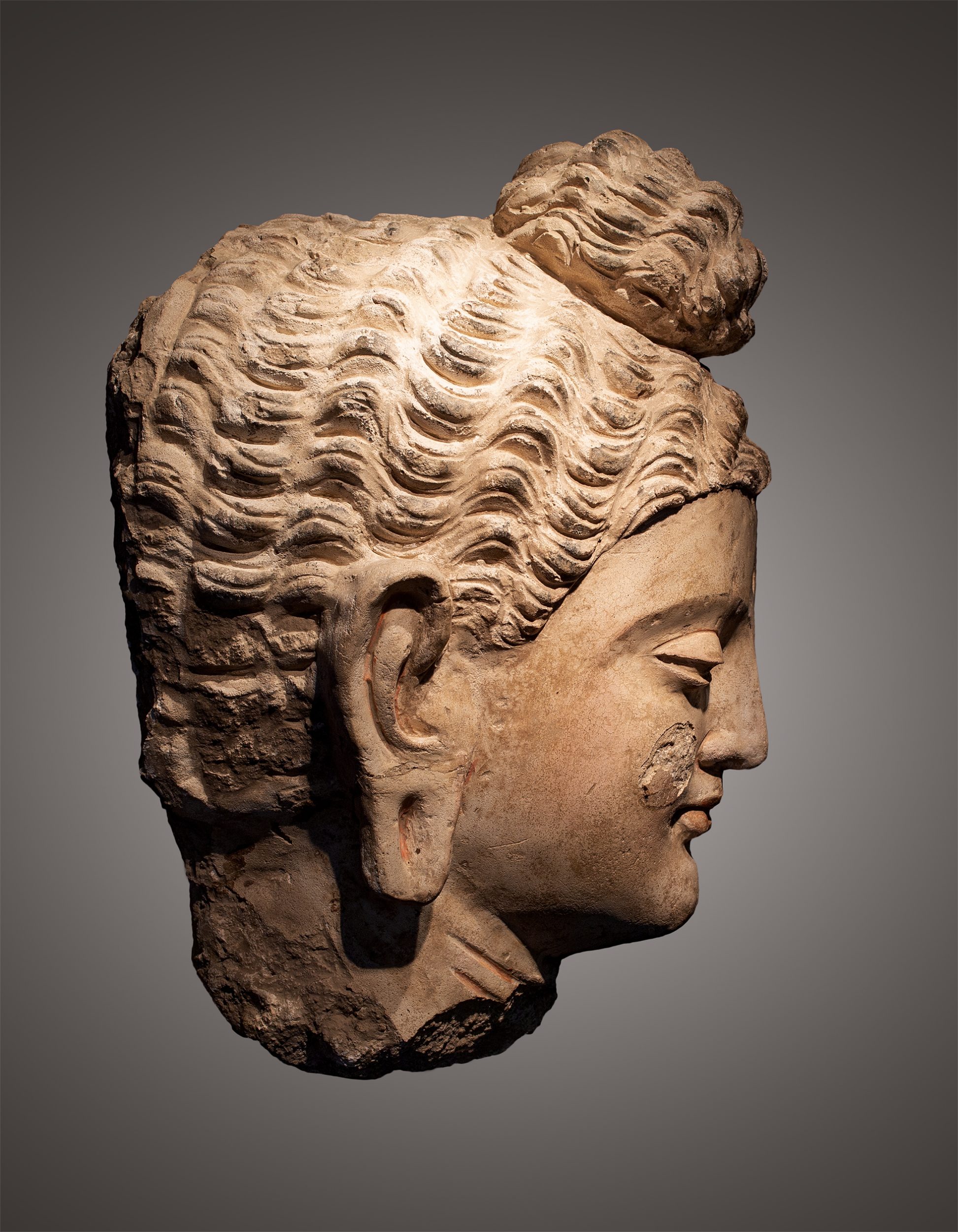
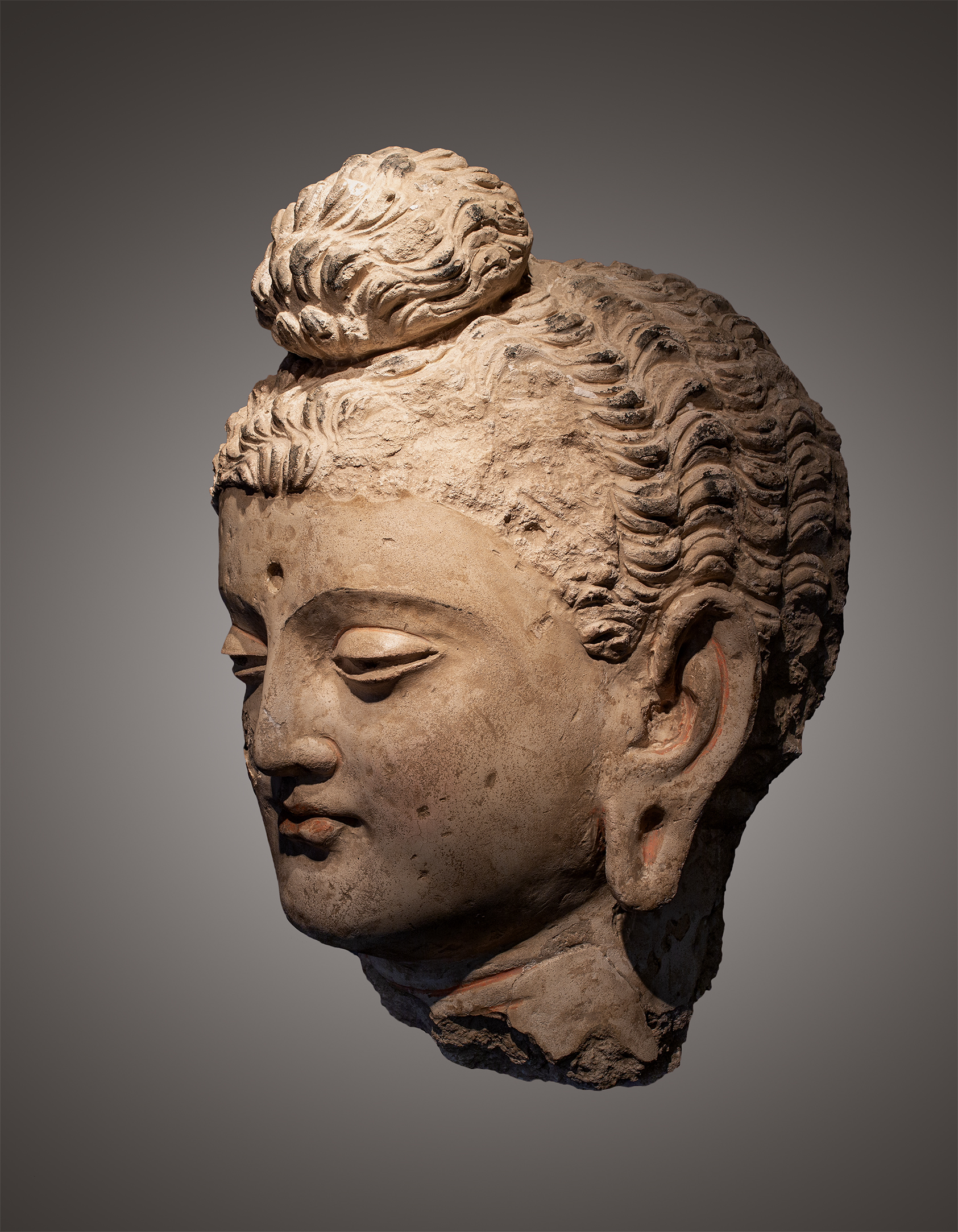
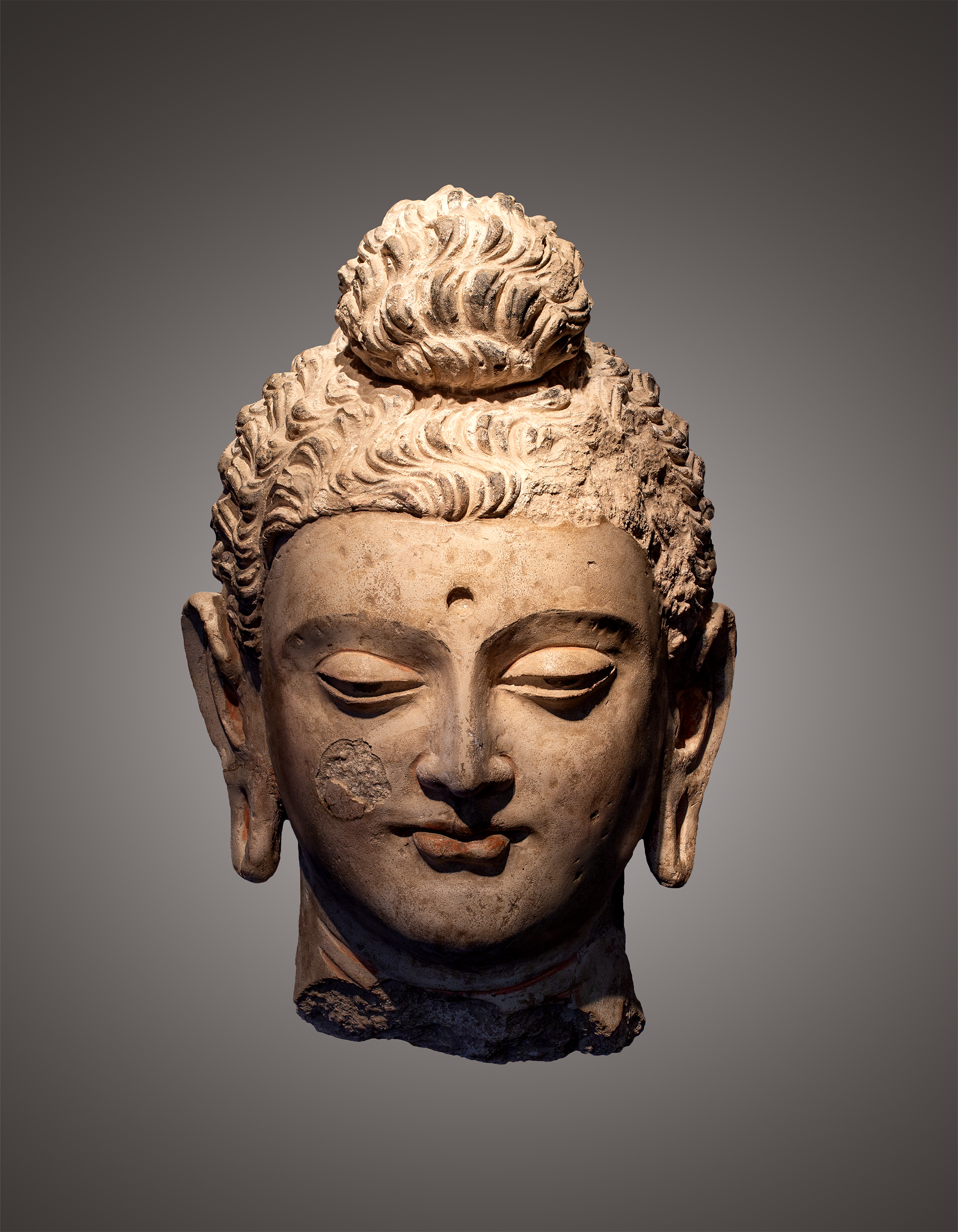
The figure represents the Buddha as an itinerant monk, following a fully developed iconographic model. The distinguishing features are the ushnisha, symbol of enlightened wisdom, the urna, mark of spiritual insight, and the elongated earlobes, recalling his princely past.
The style reflects mature Gandharan aesthetics, strongly influenced by Hellenistic art. The wavy hair, harmonious features and half-closed eyes express meditative concentration. The gentle smile conveys inner detachment and spiritual calm. The use of red and black pigments enhances the naturalistic quality of the face and creates a vivid sense of presence. The balance between idealization and realism gives the sculpture strong expressive power.
The excellent state of preservation allows the original modeling and polychromy to be fully appreciated. This work is an outstanding example of Gandharan Buddhist sculpture from the Kushan period.