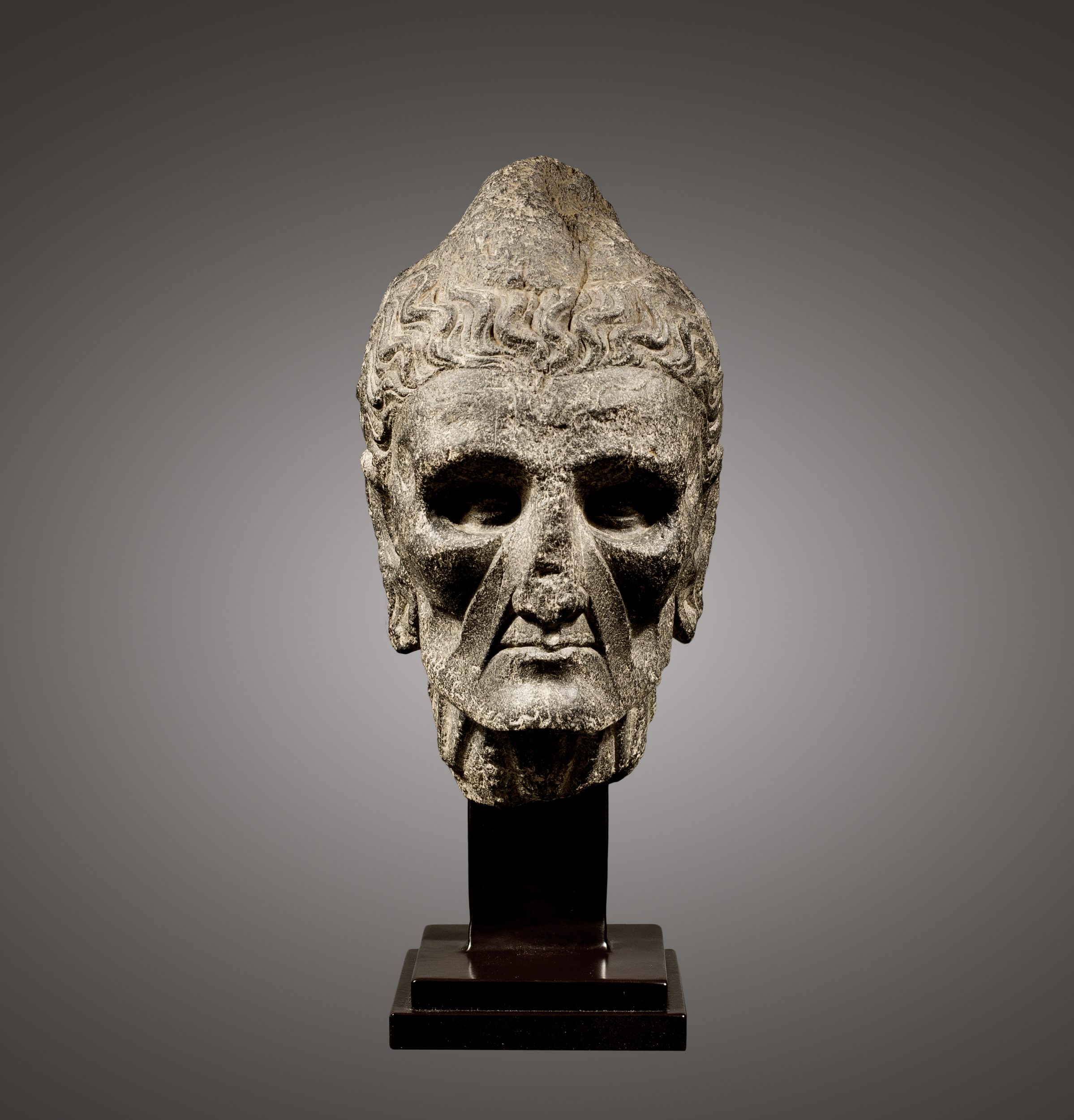
Period: Kushan period, 1st century AD
Materials: Schist
Dimensions: 21 cm
Provenance
Private Collection, Berlin
Description
Gandharan art, developed between the 1st century BC and the 4th century AD, marks the birth of Buddhist iconography. In this region, the first anthropomorphic images of the Buddha and Bodhisattva emerged. This transformation is closely linked to the spread of Mahayana Buddhism.
This sculpture represents Siddhartha during his ascetic phase before Enlightenment. This rare iconography is almost exclusive to Gandharan art. Unlike later serene images of the Buddha, this representation captures a moment of extreme spiritual struggle.
The deeply sunken eyes, hollow cheeks, prominent bone structure and tense musculature reveal a careful observation of physical deprivation. This realism reflects the Greco-Buddhist artistic tradition of Gandhara. The wavy hair, derived from Hellenistic models, suggests an early date.
The emaciated body symbolizes spiritual discipline and the transcendence of physical limitations. This phase precedes the discovery of the Middle Way. This sculpture is a key example of early Buddhist imagery. It belongs to the broader Gandharan tradition, alongside images of the Buddha and narrative reliefs. It plays an important role in understanding the development of Buddhist art.