Period: 6th century
Materials: Bronze
Dimensions: 23 cm
Description
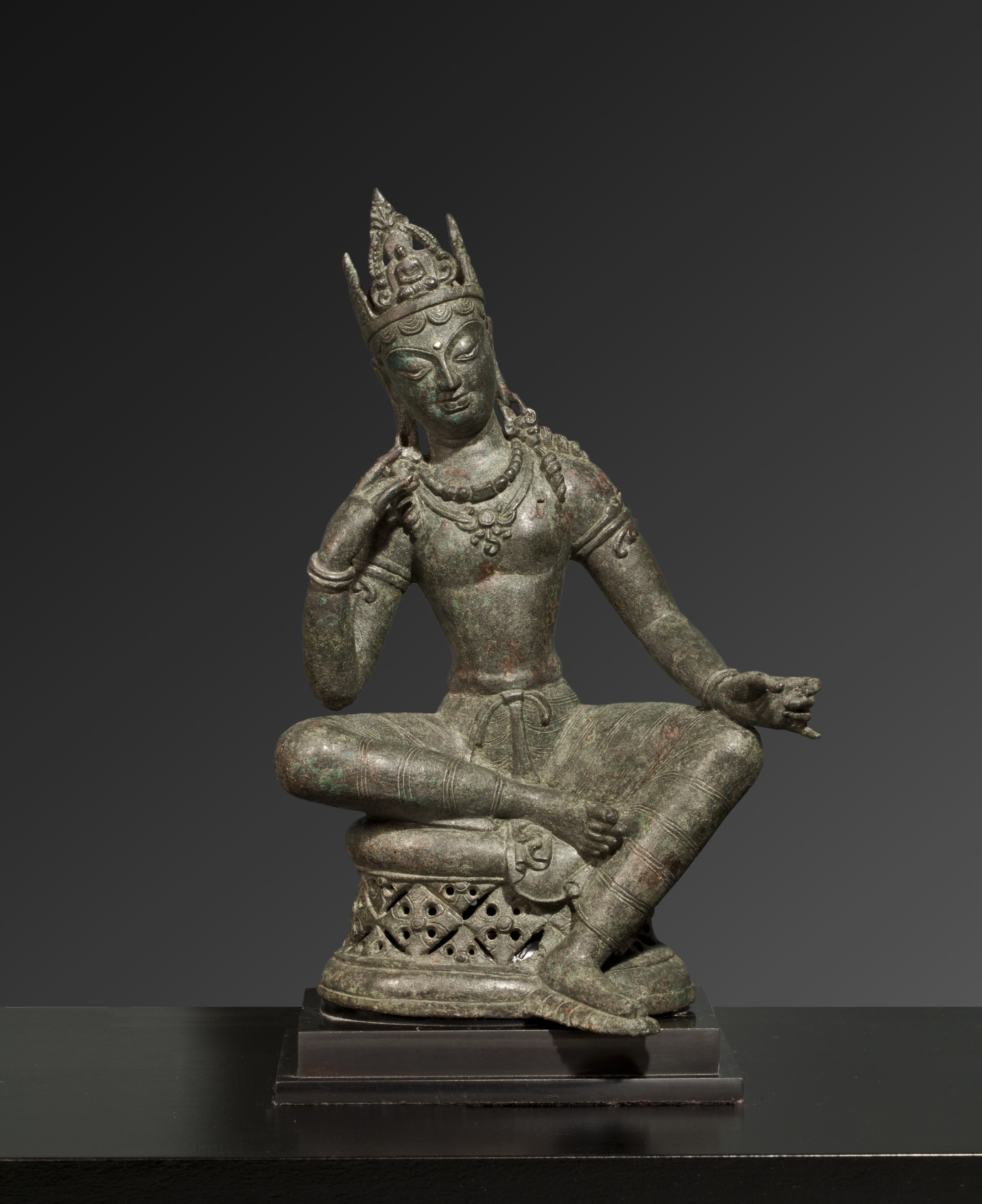
This sixth-century bronze from the Swat Valley represents Padmapani, a manifestation of Avalokiteshvara. The lotus and small image of a Buddha in the crown define its iconography. The figure sits in lalitasana, with the right hand held close to the face.
The arrangement of the legs and tilt of the head articulate the pose while maintaining the unity of the composition. The modelling combines the naturalism of the Gandharan tradition with a greater stylisation of forms.
The movement of the hand towards the face gives the image a contemplative character. In relation to the sideways extension of the other arm, this gesture draws attention to the head and lends variety to the figure’s outline. The base and arrangement of the limbs contribute to the bronze’s stability, keeping the body and attributes legible at a height of 23 centimetres.
Located on routes between the Indian world and Central Asia, the Swat Valley was a meeting place for Buddhist artistic traditions. The bronze records the region’s metalwork, intended for monastic settings and private devotion.