Period: Late 19th to early 20th century
Culture: Bembe, Democratic Republic of the Congo
Materials: Wood, porcelain
Height: 19 cm
Provenance
Philippe Sohier Collection (1961–2023), France
Period: Late 19th to early 20th century
Culture: Bembe, Democratic Republic of the Congo
Materials: Wood, porcelain
Height: 19 cm
Philippe Sohier Collection (1961–2023), France
Bembe statuettes entered European collections relatively late: the first documented example was acquired in 1930 by the Musée de l’Homme in Paris through a donation from Victor Babette. Similarly, they appeared comparatively late in the literature, notably in C. Kjersmeier’s Centre de Style de la Sculpture nègre africaine, published in Paris in 1935. William Fagg aptly described them in the catalogue of the 1964 Paris exhibition 100 Tribus, 100 Chefs d’Œuvre: “The Bembe must be regarded as the master miniaturists of African wood sculpture… and [the statuettes] are often of monumental quality”.
Although carved according to a wide variety of stylistic conventions, none of which can be associated with clearly defined centres of production, the biteki statuettes, literally “carved figures”, were distributed mainly through Mouyondzi, the capital of the Bembe region. There, a section of the market was traditionally reserved for sculptors and sellers of traditional medicinal remedies, and anyone in need of a biteki could purchase one.
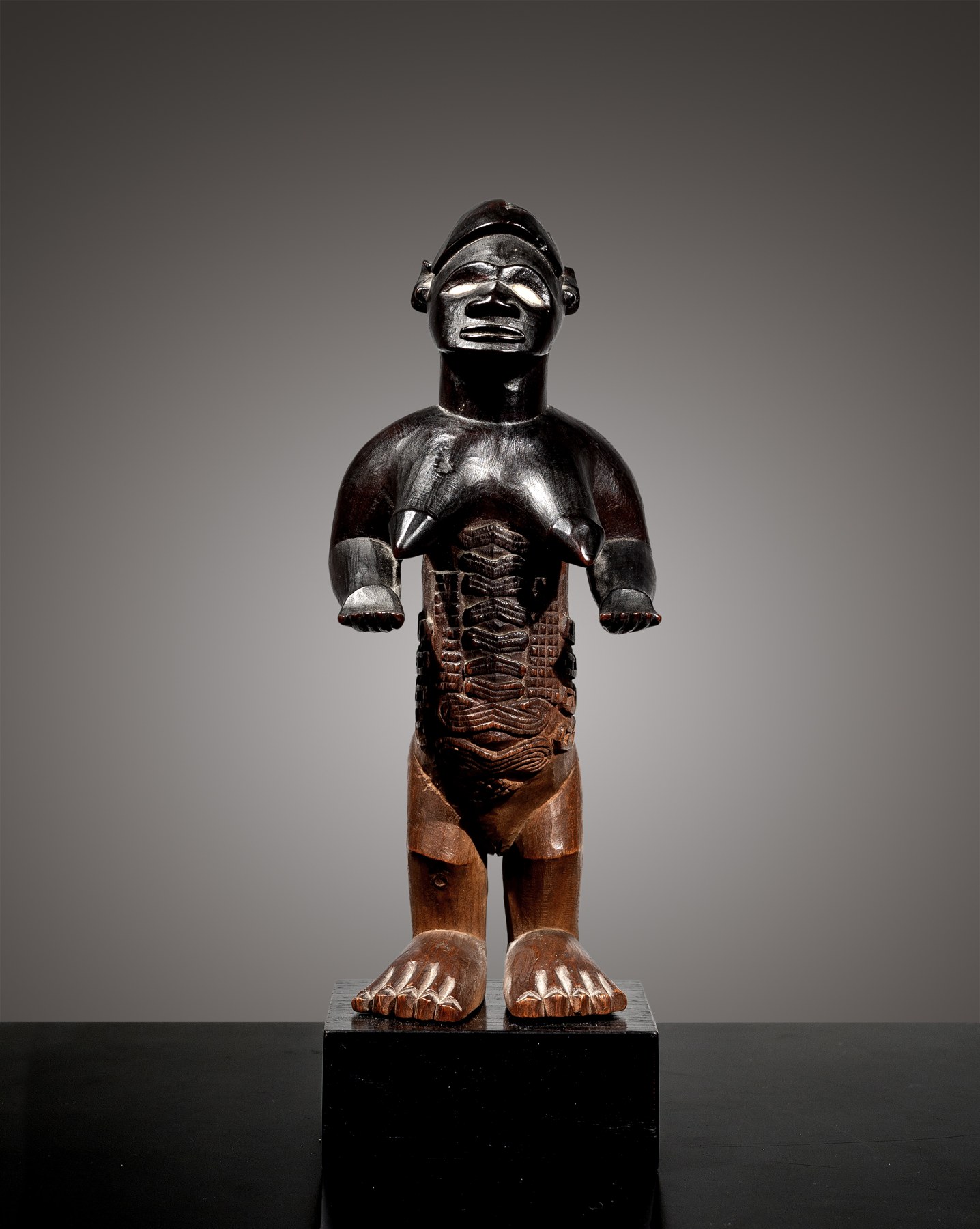
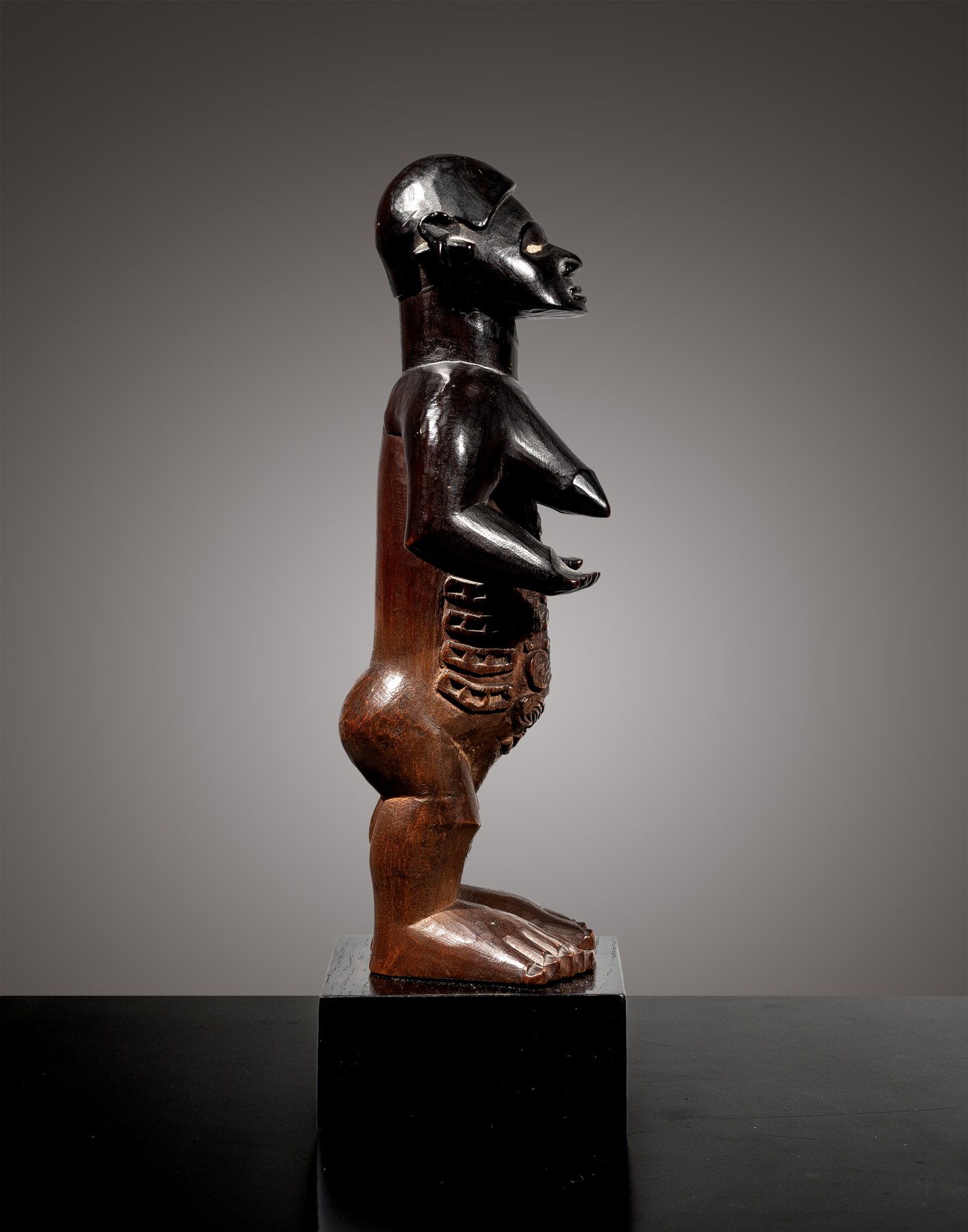
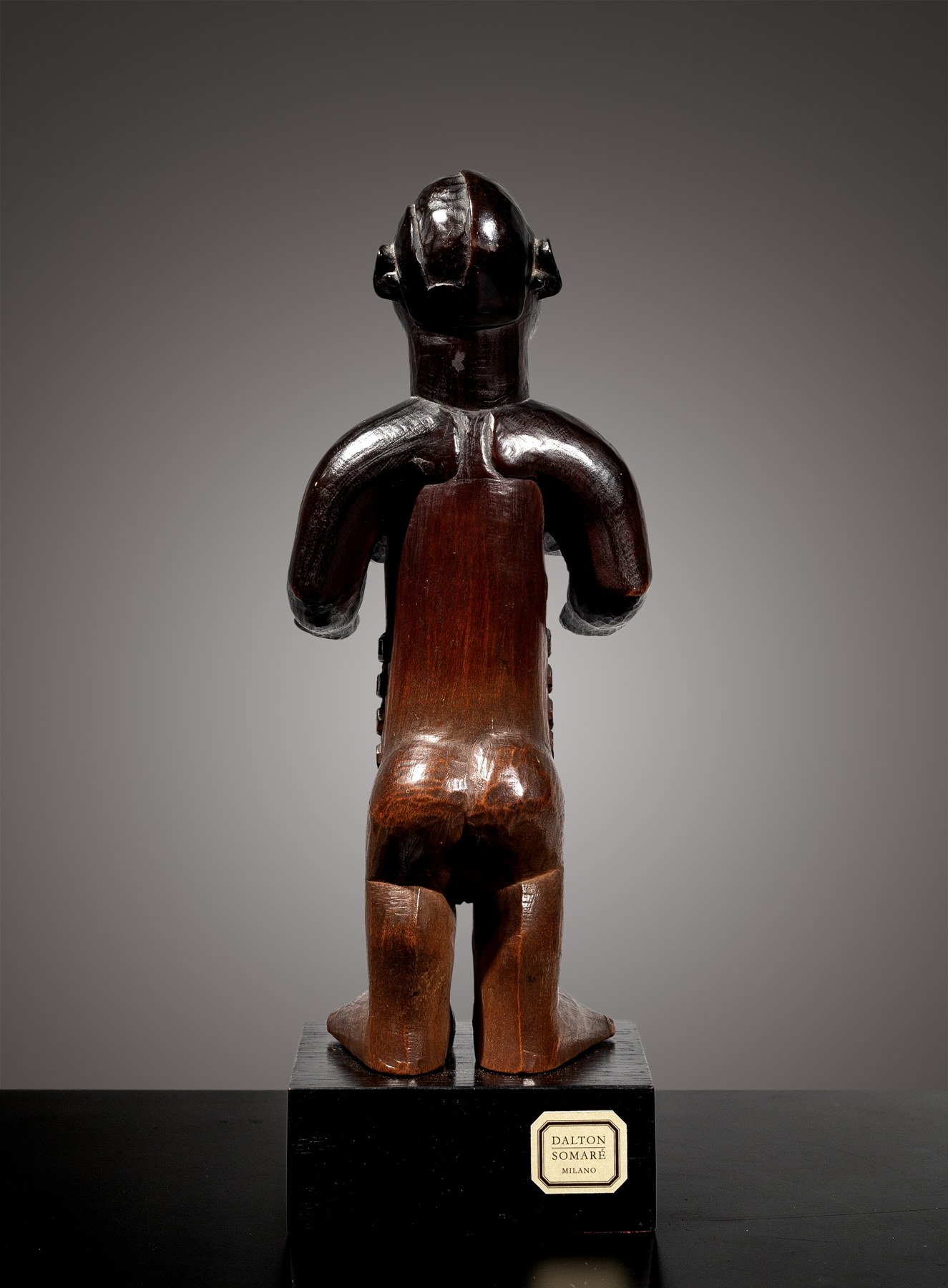
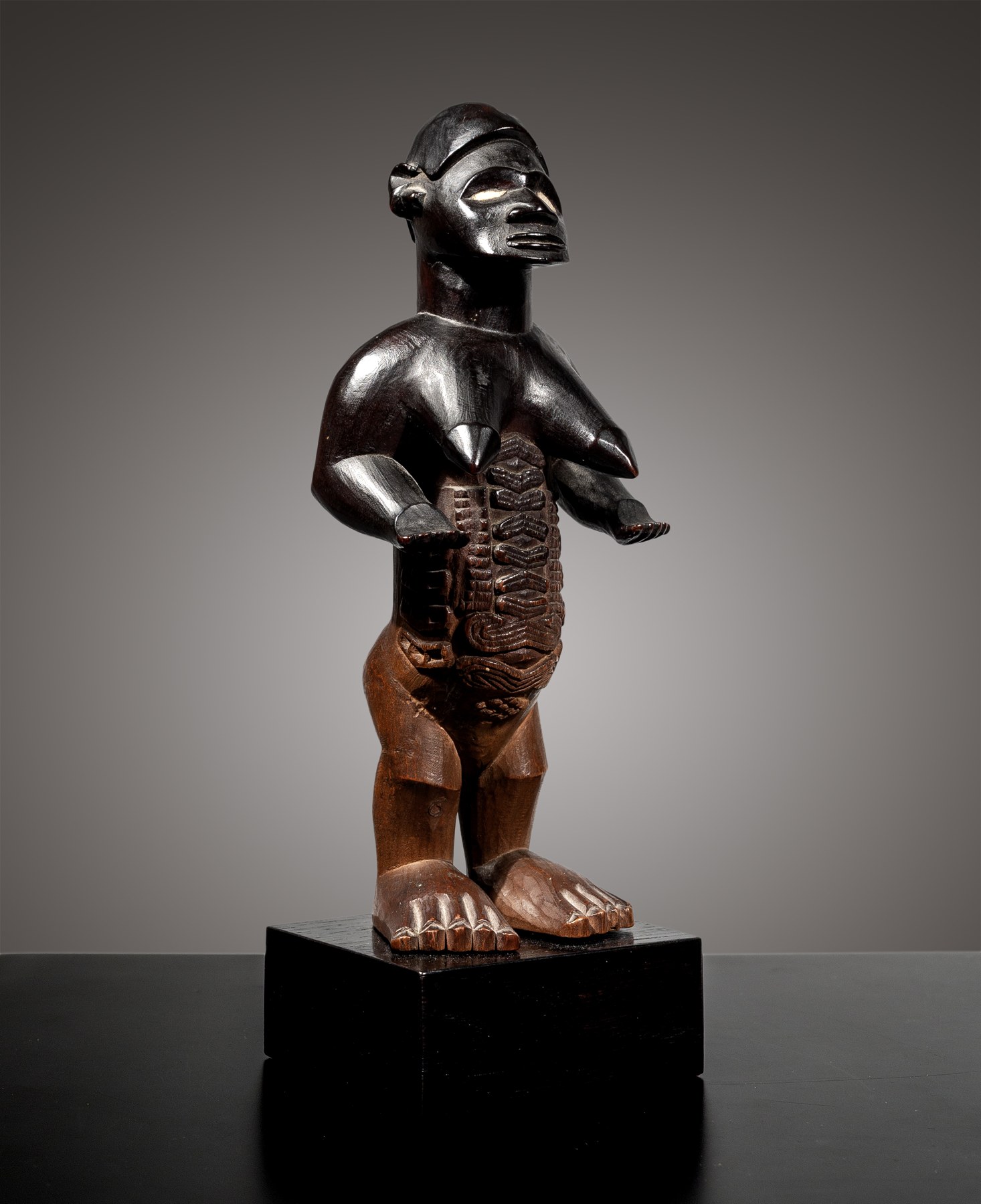
In terms of function, Bembe statuettes fall into two categories. The first, to which the figure under consideration belongs, was intended to preserve the memory of an ancestor for subsequent generations and can therefore be regarded as a conventionalised portrait. The second category was conceived for a magico-religious purpose, serving as a receptacle for a “force” that could be magical, political or therapeutic in nature. Ancestor effigies from the Mouyondzi region are distinguished by the presence of a cavity serving as a receptacle. This may be concealed within a prism-shaped element serving as a seat or, as in the present example, may take the form of an opening in the anal area.
A feature shared by the vast majority of Bembe statuettes is the pattern of body markings extending from the chest to the abdomen. These scarifications, so characteristic of Bembe statuary, may indicate the identity and social status of the individual represented, or they may be conventional decorative motifs chosen by the sculptor. Indeed, when informants were asked to explain their symbolism, they stated that their purpose was simply “de faire beau”, that is, to make the figure beautiful. There are good reasons to believe that body markings carved in high relief preceded incised examples, which are therefore characteristic of more recent statuettes.
The vast majority of Bembe figures depict standing individuals, as exemplified by this representation of a female ancestor, which is of exceptional sculptural quality. No specific symbolic meaning seems to be associated with these postures, although in this case the position of the hands, with the palms facing upwards, could be interpreted as a gesture of offering to her descendants.