Period: 19th century
Area: Mankono, Ivory Coast
Materials: Non-ferrous metal alloy
Height: 26 cm
Provenance
Serge Schoffel, Brussels
Private collection, Paris
Period: 19th century
Area: Mankono, Ivory Coast
Materials: Non-ferrous metal alloy
Height: 26 cm
Serge Schoffel, Brussels
Private collection, Paris
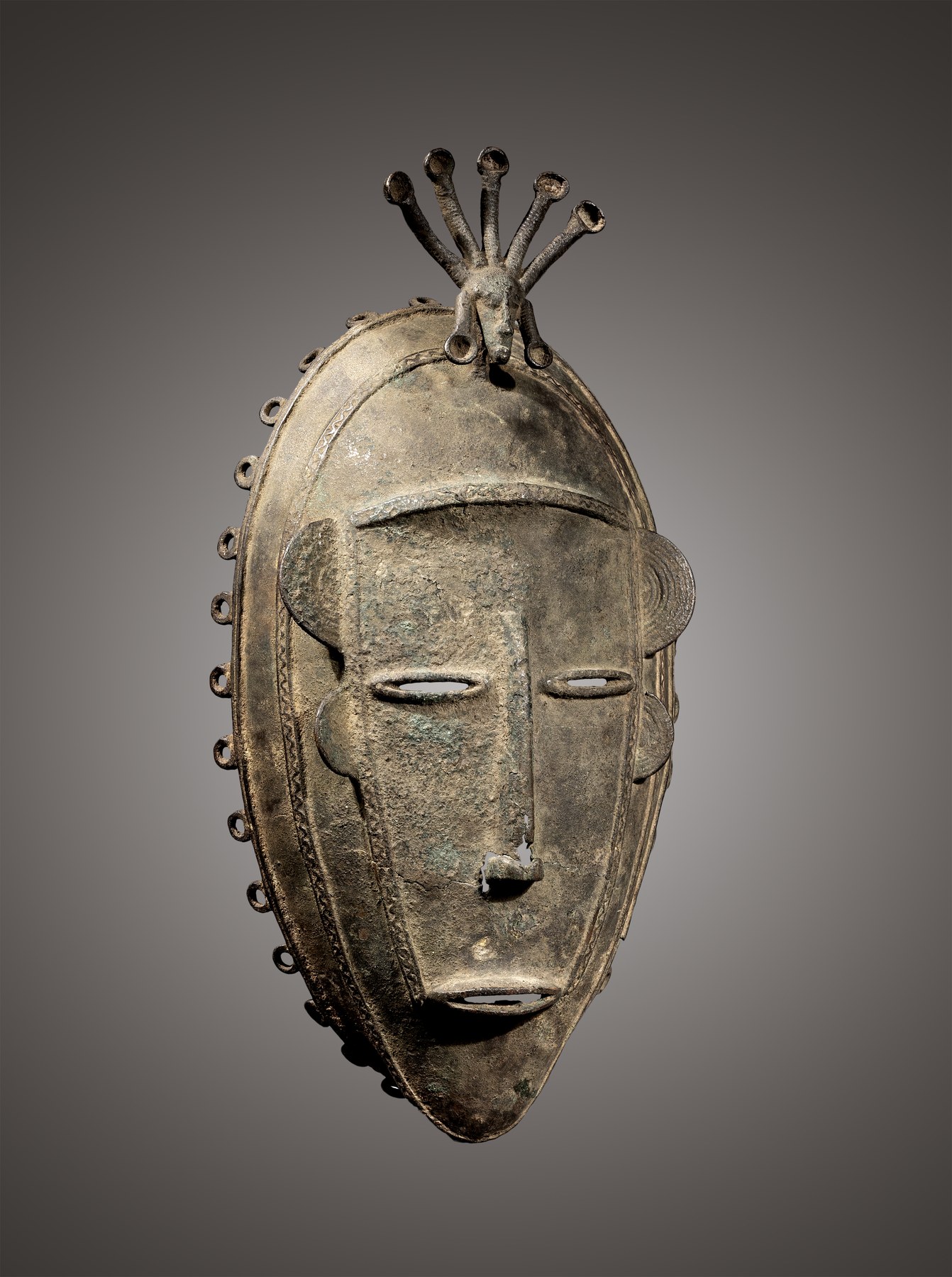
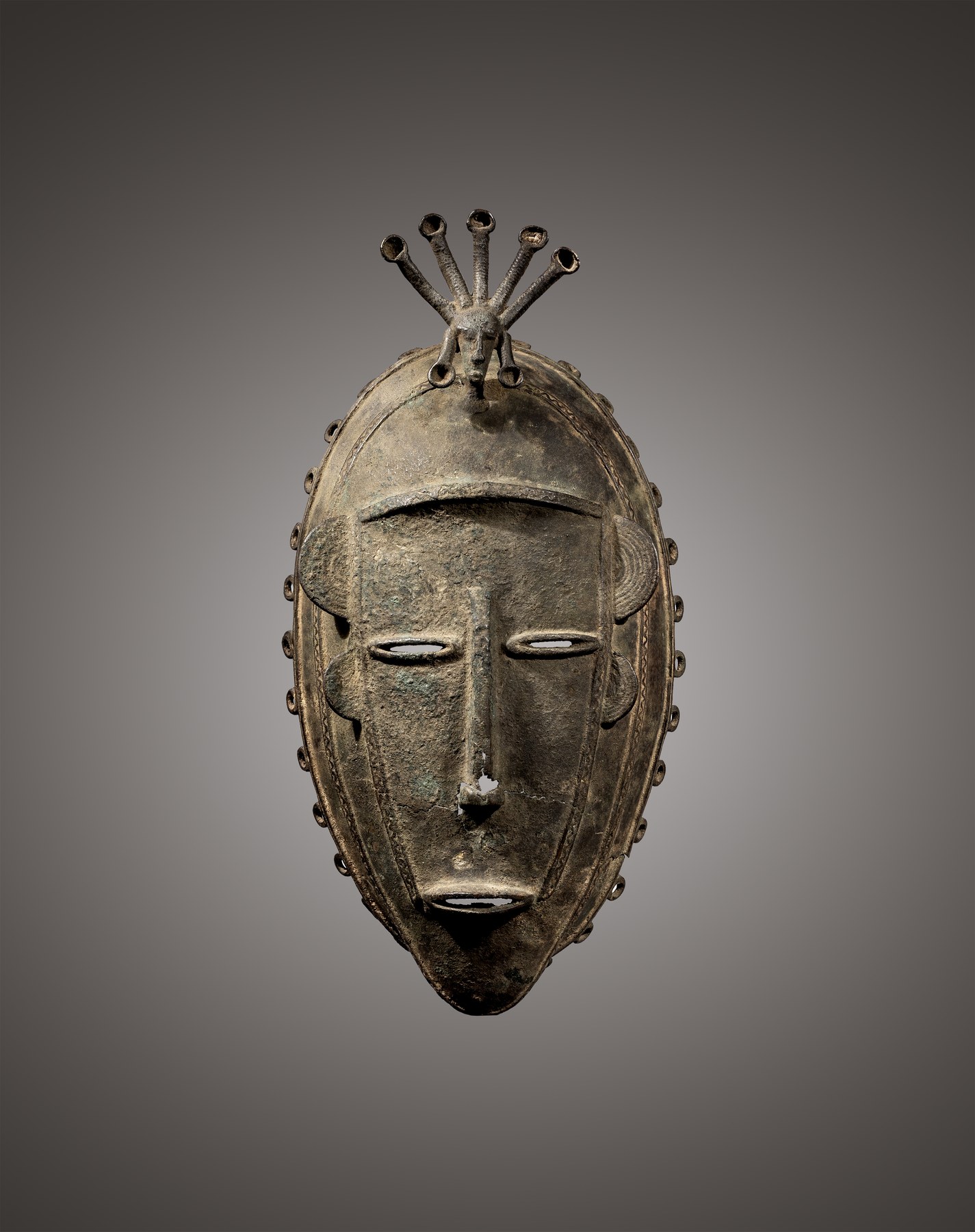
Masks in non-ferrous alloys (ranging from brass to tin-lead), cast using the lost-wax technique, are extremely rare in West Africa. The oldest and best-known archetype of this type of mask is the example considered “proto-Senufo”, originating from a group of funerary objects found on the border of Côte d’Ivoire and dated to the eleventh to thirteenth centuries, now at the Musée Royal de l’Afrique Centrale in Tervuren. This archetype belongs to the “kpelye” type, combining anthropomorphic elements (the human face) and zoomorphic elements (the horns), and suggests a convergence of elements from archaic Sudanese zoomorphic masks with the more naturalistic features characteristic of Diula production.
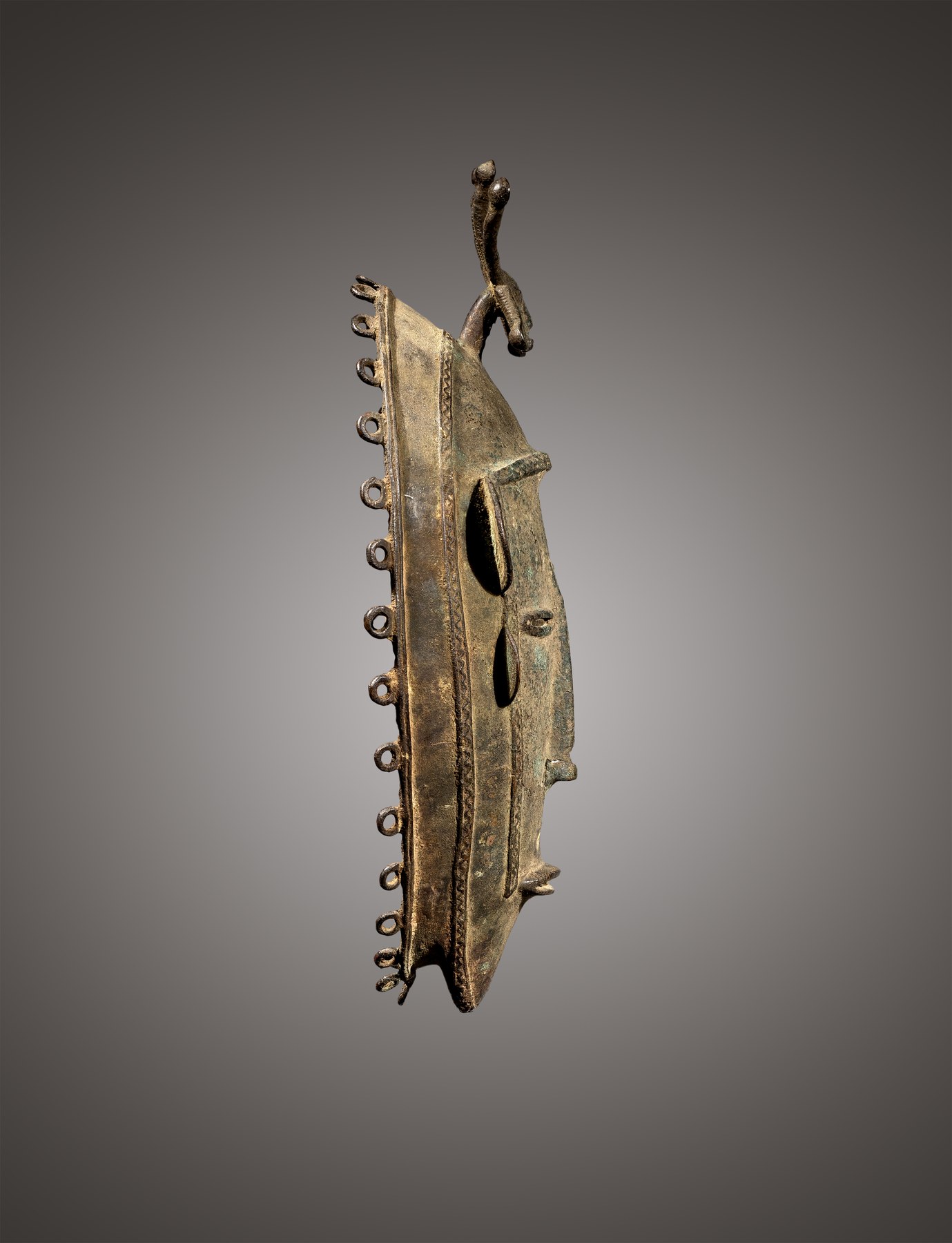
Indeed, the absence of horns or other animal features distinguishes the mask under consideration from the classic “kpelye” model and suggests that it was produced in one of the Diula villages, even if situated within Senufo territory. Among the Diula, according to information provided by village elders, masks of this type were known as do muso (the girl of the do) and were intended to participate in the masked dances of this initiation society.
Apart from the lateral appendages and the undulating decorations surrounding the face and alluding to cosmetic scarification, the only element projecting from the orderly plane of the facial features is the protome in the form of a female head (as indicated by the braids structuring the hairstyle), which emerges from the forehead. This particular motif is found on a small number of other Diula masks, the best known of which is now at the Barbier-Müller Museum in Geneva and comes from the collection of the Californian sculptor William Moore. Apart from the flat, downward-pointing horns, the protome on the Barbier-Müller mask shows such a close affinity with that of the mask under consideration that it is plausible to suggest that these two masks, if not by the same maker, are at least the work of the same circle of casters.
From an aesthetic standpoint, particular emphasis should be placed on the rigorous, geometric austerity of the arrangement of the facial features and the expressive authority it conveys, further enhanced by the beautiful archaeological patina covering the surface of the metal.