Period: 14th century
Materials: Gilt copper
Dimensions: 33 cm
Description
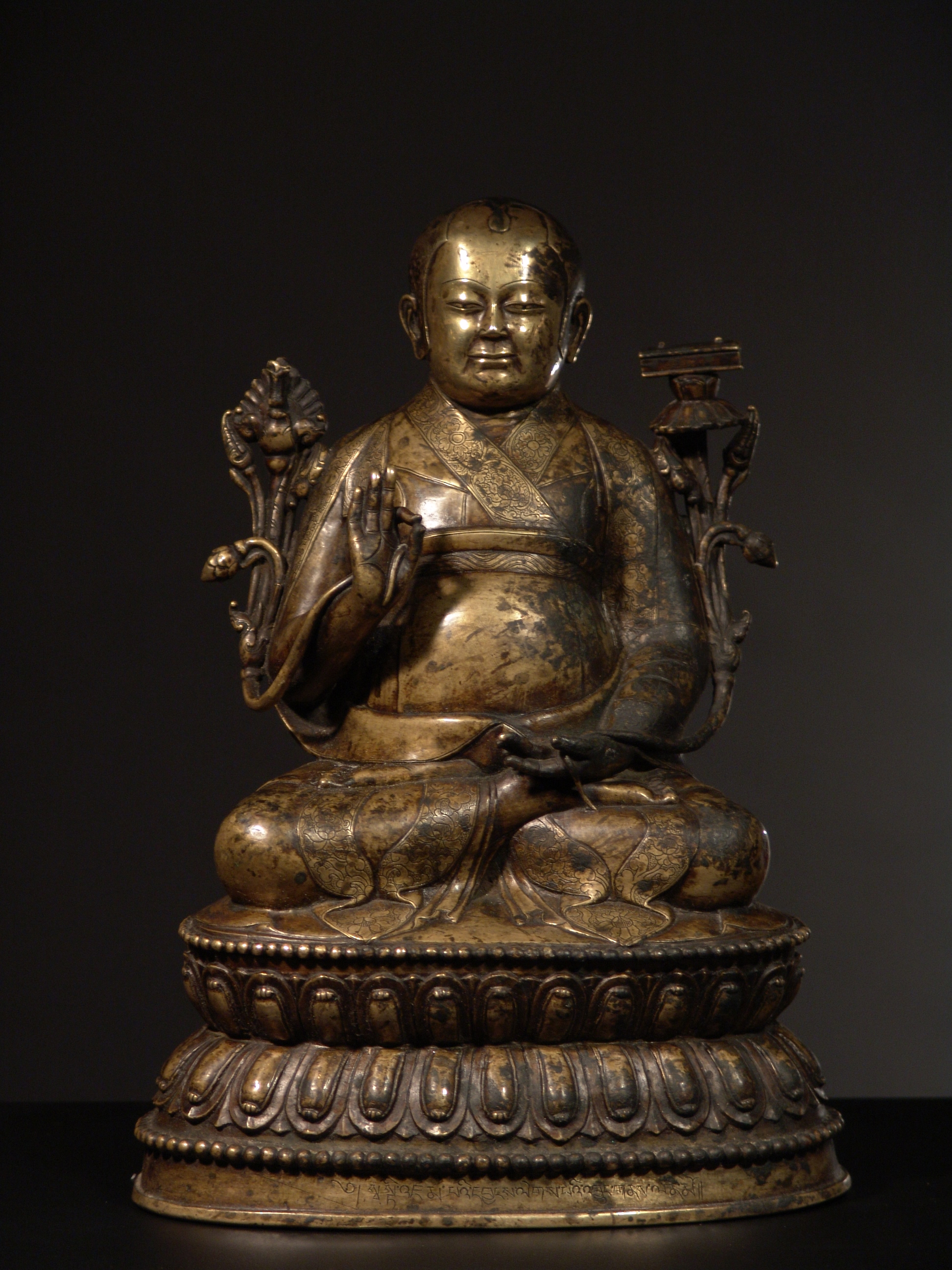
This gilt copper Sakya lama, made in Tibet in the fourteenth century, sits cross-legged on a lotus base. The monastic robe wraps around the body and follows the arrangement of the legs. The face and gestures convey the teacher’s role in transmitting the Dharma.
Floral stems associated with the hands support the attributes. The sacred book evokes doctrinal knowledge, while the teaching gesture refers to the communication of the Dharma. Lotus and text bring together spiritual purity and learning.
The book placed on the lotus makes the relationship between the teacher and doctrinal tradition explicit. The image combines religious dress, a meditative pose and the attributes of teaching with an individualised face. The lama appears as a guide and transmitter of knowledge. Gilding unifies the elements of the figure, while the folds of the robe and petals of the base articulate the transition from body to support.
In the Vajrayana tradition, the lama guides the disciple’s religious practice and preserves the teachings of his lineage. Images of teachers therefore hold a central place in Tibetan devotional sculpture.