Period: 15th century
Materials: Gilt copper with semi-precious stones
Dimensions: 28 cm
Description
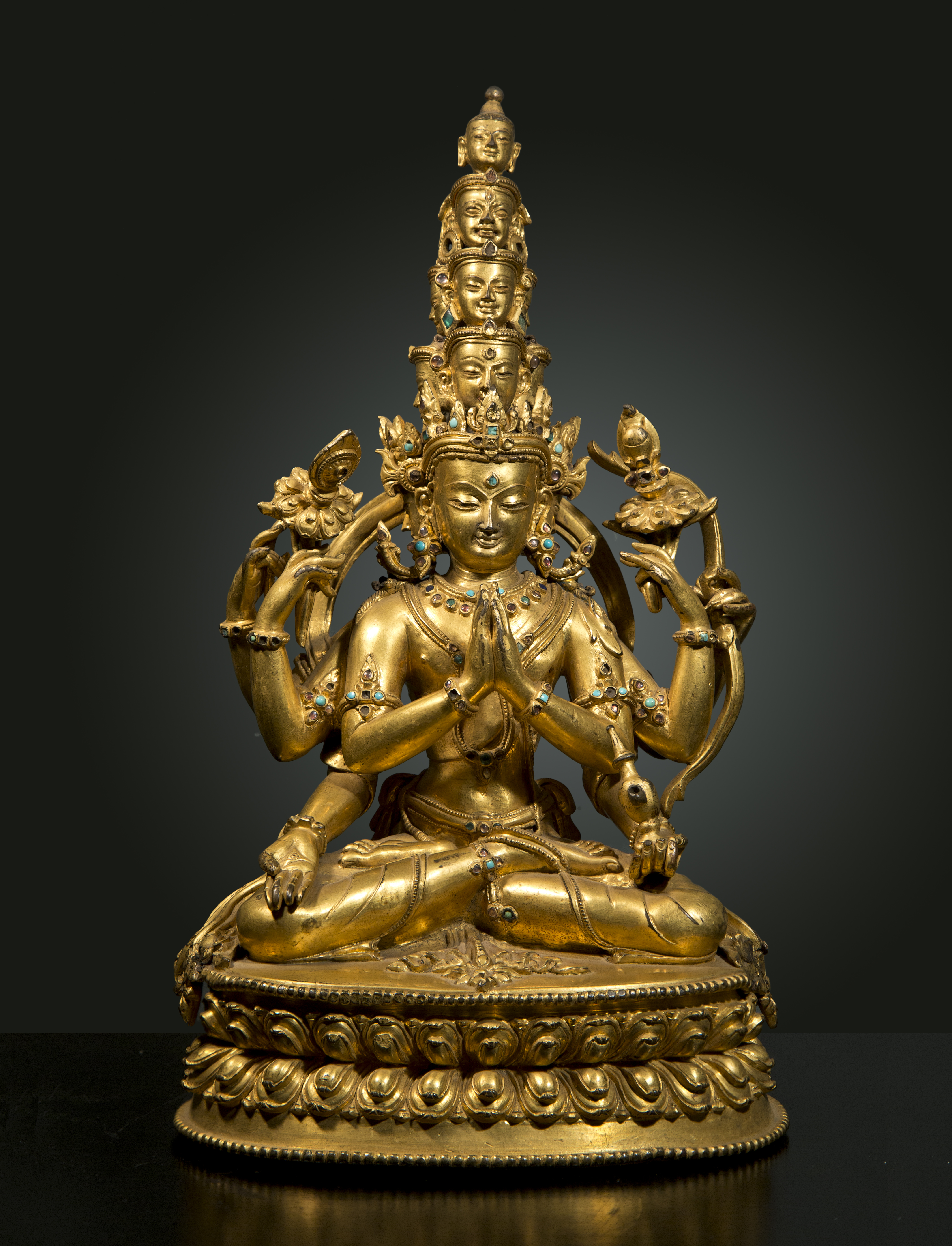
Avalokiteshvara is the bodhisattva of compassion, venerated in the Mahayana and Vajrayana traditions. In this fifteenth-century Tibetan sculpture, the multiplication of faces and arms expresses his ability to hear the suffering of living beings and come to their aid. The theme belongs to the deity’s tantric forms, which include Sahasrabhuja, the “bodhisattva with a thousand arms”.
The limbs follow a clear compositional order: the faces rise along a vertical axis, while the arms extend to either side of the body. The compact torso contrasts with the arrangement of attributes and ornaments. In Vajrayana Buddhism, this structure gives visible form to the different aspects of Avalokiteshvara’s compassionate action. Figure, gesture and ritual objects together provide an image of the deity for meditation.
The lotus, wish-fulfilling jewel and mala, or Buddhist rosary, evoke spiritual purity, attainment and the recitation of mantras. These attributes accompany the visualisation of the deity in meditative practice.
The gilt copper work and semi-precious stone inlays are characteristic of late medieval Tibetan production. Gilding brings light to the surface, while the ornaments articulate the figure. Its small dimensions suit placement on a domestic altar or in a monastic devotional setting.